Discover the meaning of the Wedding Feast of the Lamb in the Catholic faith: a promise of joy, communion and hope at the heart of the liturgy.
The Wedding Feast of the Lamb: a promise of joy and Christian hope
Today’s liturgical calendar marks an ordinary day in the last week of Ordinary Time. The readings direct our attention to the fulfilment of history, God’s faithfulness and these words full of light: ‘Blessed are those invited to the wedding feast of the Lamb.’ ”
As Advent approaches, this image of the wedding feast takes on a very special resonance. It reminds us that the Christian faith is not merely about fear of the end times or the expectation of judgement. It is, above all, a hope: the hope of being welcomed by God, gathered together in his love and invited to a joy that will never end.
The wedding feast of the Lamb is one of the most beautiful images in the Book of Revelation. It speaks to us of the risen Christ, of the Church called to live in communion, and of the definitive victory of love over all that disfigures humanity.
The Lamb: an image of Christ given out of love
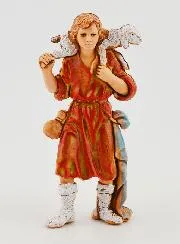
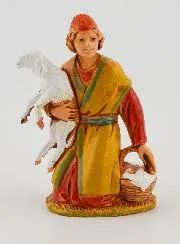
In the Bible, the lamb is a very powerful image. First and foremost, it recalls the Passover lamb, whose blood was the sign of the liberation of the people of Israel during the Exodus from Egypt. This memory is essential to understanding the Christian faith.
For Christians, Jesus is the Lamb of God. He gives his life out of love, not through violence or domination, but through the offering of himself. His death and resurrection open a path to liberation. He comes to deliver us from sin, fear, despair and everything that separates us from God.
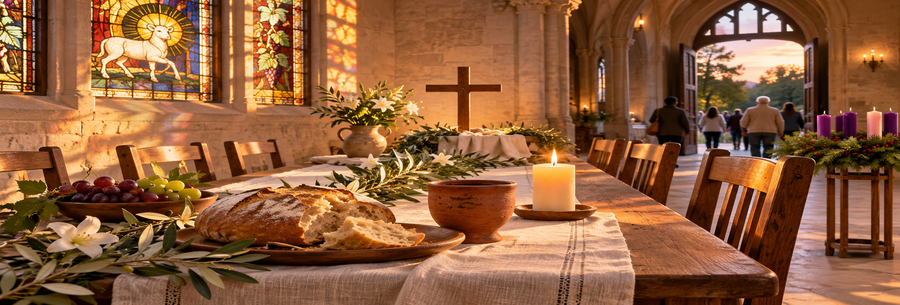
When the Book of Revelation speaks of the wedding feast of the Lamb, it is therefore not simply describing a festive meal. It heralds the full communion between Christ and his people. This is the fulfilment of God’s love: a love that calls, that lifts up, that forgives and that seeks to bring us together.
This image reminds us that our faith is not based on an abstract idea. It is based on an encounter with the living Christ, who knows us, loves us and is preparing a place for us beside him.
Why does the Bible speak of a wedding?
In Holy Scripture, the image of a wedding expresses the covenant between God and his people. It evokes a relationship of faithfulness, tenderness and joy. God does not wish to live far from humanity: he desires to enter into a deep relationship with each of his children.
A wedding also speaks of a promise. Two spouses choose to give themselves to one another, to walk together and to remain faithful throughout the years. In the same way, God remains faithful to his covenant, even when people turn away from him.
The Book of Revelation takes up this image to proclaim that evil, injustice and death will not have the final say. Christ comes to fulfil his work of salvation. What appears to be wounded, divided or lost can be restored and reconciled in God.
The wedding feast of the Lamb is therefore a promise of peace. It invites us to believe that God is preparing a future greater than our fears and more enduring than our frailties.
A meal that foreshadows the Eucharist
Whenever Christians gather to celebrate the Eucharist, they already receive a foretaste of this wedding feast of the Lamb. The Mass is not merely a remembrance of Jesus’ last supper with his disciples. It is also a real encounter with the risen Christ.
In the Eucharist, Jesus nourishes us with his Word and his Body. He gathers different people round the same spiritual table. Rich or poor, young or old, those at peace or those who are wounded, all are invited to receive God’s grace.
Communion reminds us that no one is saved alone. We are called to form one people, a family of believers. This fraternal dimension is essential. Christ unites us to himself, but he also unites us to one another.
Receiving the Eucharist therefore commits us to living out greater charity. We cannot welcome Christ into our hearts whilst closing our hearts to our brothers and sisters. The meal of the Lamb calls us to become, from this day forward, builders of peace and communion.
A hope that does not shy away from the realities of the world
The readings at the end of the liturgical year can sometimes use striking imagery. They speak of upheavals, of cities falling, of fragile powers and of signs in the world. Yet their deeper message is not to shut us away in fear.
The Word of God reminds us that nothing built on injustice, pride or violence can last for ever. Human powers pass away. Wealth can vanish. Even the most seemingly solid plans can crumble. But God’s love endures.
Christian hope does not mean turning a blind eye to the world’s suffering. On the contrary, it gives us the strength to face it truthfully, without despair. It urges us to act, to serve, to defend human dignity and to support those who are suffering.
To believe in the wedding feast of the Lamb is to believe that our history has meaning. It is to believe that God does not abandon us to chaos. It is choosing to live from this moment onwards according to the logic of the Gospel: forgiveness rather than resentment, sharing rather than indifference, trust rather than discouragement.
‘ ‘Stand up and lift up your heads’
Today’s Gospel carries a powerful invitation: when events unsettle the world and hearts are gripped by fear, Jesus tells his disciples to stand up and lift up their heads, for their deliverance is drawing near.
These words do not deny the difficulties. Jesus understands human anxieties. He knows that the disciples may be troubled by the future. But he asks them not to let fear take hold of them.
To lift up our heads is to refuse to live as prisoners of what weighs us down. It is to regain confidence, even when we do not understand everything. It is to believe that God continues to work at the heart of our lives.
This invitation applies to many situations: illness, family worries, financial difficulties, conflict, bereavement or profound loneliness. At such times, it is not always easy to pick ourselves up. Yet faith teaches us to take one step at a time, to ask for help and to entrust our fragility to the Lord.
Christ does not promise a life without trials. He promises his presence. He walks with us and leads us towards the light.
Preparing for Advent in hope
On the eve of Advent, this meditation on the wedding feast of the Lamb helps us to enter into a time of deeper anticipation. Advent is not merely an external preparation for Christmas. It is a time to rekindle our hope.
We might ask ourselves: what are we truly waiting for? What do we wish to see grow in our lives? Do we still have room for prayer, silence, forgiveness and an encounter with God?
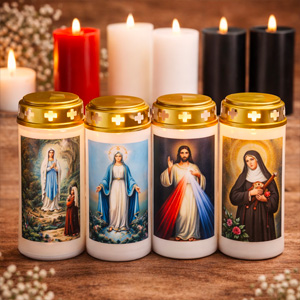
Preparing for Christmas means preparing our hearts to welcome Christ. This can begin with very simple gestures: lighting a candle, reading a few verses from the Gospel, taking a moment’s silence, phoning someone who is lonely, asking for forgiveness or offering a gesture of reconciliation.
The wedding feast of the Lamb reminds us that God is inviting us. He does not close his door to those who return to him. He waits patiently for each of us, like a Father who longs to see his children living in peace.
Living from this moment onwards as God’s guests
Being invited to God’s feast is a grace, but also a call. If we hope one day to live in the joy of the Kingdom, we are invited to show signs of it from today.
This involves being welcoming. In a society where so many people feel lonely or rejected, opening one’s heart and one’s table can be a very powerful witness. It does not necessarily involve grand gestures: a shared meal, a word of comfort, a visit or simply listening attentively can already reveal God’s tenderness.
It also involves forgiveness. The Lamb’s supper is a meal of reconciliation. We cannot always heal wounds immediately, but we can ask God to give us a freer and more peaceful heart.
Finally, it is about joy. Christian joy is not an obligation to appear happy. It is a deep trust: even in the midst of trials, we know that God is faithful and that his love leads us towards life.
Prayer to enter into hope
Lord Jesus,
Lamb of God,
you invite us to the meal of your love.
When our hearts are troubled,
teach us to lift up our heads
and to place our trust in you.
Grant that we may live in peace,
share with those who lack everything,
forgive with patience
and keep hope alive in the midst of trials.
Prepare our hearts to welcome you
and make our families, our homes
and our parishes
places of fellowship and light.
Amen.