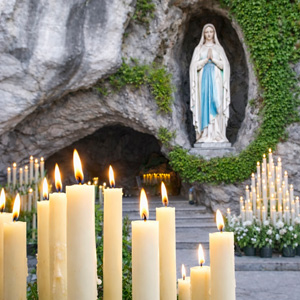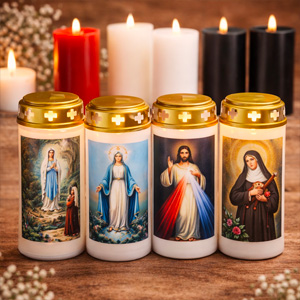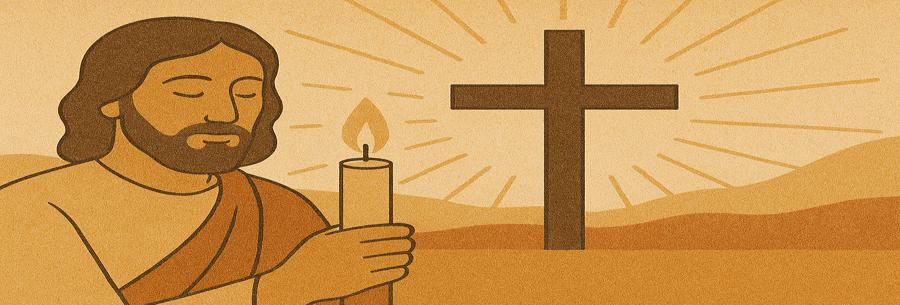
On Easter night, a flame is lit. Just one, at first, fragile, flickering. Then it is passed on, from hand to hand, from candle to candle. The light grows, invading the space. And little by little, the darkness recedes. This gesture, so simple and so beautiful, is at the heart of the Easter liturgy. It is not a decoration. It is a language. For at Easter, Christians celebrate much more than an ancient event: they celebrate the return of light, the triumph of life, the rebirth of hope. And this light is that of the risen Christ.
A light through the night
Easter begins in the night. Not because the sun has not yet risen, but because this night is reminiscent of the night of the human heart. The night of doubt, of suffering, of injustice, of waiting. The night of the tomb. The night of God's silence. But at the very heart of this darkness, a flame emerges. It doesn't light up all at once, but slowly spreads. Like a breath, like a promise. Easter light does not deny the night: it passes through it. And that's why it speaks to so many hearts. Because it says that nothing is ever definitively lost.
Christ, the light of the world
In the Gospel according to John, Jesus says: "I am the light of the world. Whoever follows me will not walk in darkness." These words take on their full meaning at Easter. The light that is lit that night is not symbolic: it represents the living Christ. He who has come through death. He who illuminates even the thickest darkness. For Christians, Jesus is not just a figure from the past. He is the light that continues to shine in their lives, guiding them, warming them, lifting them up. The Easter fire, lit in the night, becomes a way of proclaiming that Christ is alive, today.
A light that is passed on
What is overwhelming about the Easter night liturgy is that this light does not remain in the hands of one. It is given, passed on and shared. Each person lights their own candle alongside that of another. And little by little, the church lights up. This gesture says something very powerful: faith is not a treasure to be kept for oneself. It's a light that we receive and pass on. It's a light that warms, that brings us together, that builds community. And even at times when we think we've lost our faith, we can come and rekindle its flame with a brother, a sister, a friend.
A light to illuminate our lives
Celebrating light at Easter isn't just about experiencing a beautiful moment in the liturgy. It means choosing, once again, to let Christ enlighten our lives. It means letting ourselves be touched by this light that does not judge, but reveals. It brings to light what is beautiful in us, what needs to be healed, what still has room to grow. It urges us to emerge from our confinement, to walk towards greater truth, gentleness and peace. The light of the Risen One doesn't just shine on the outside: it comes to illuminate the darkest corners of our hearts, to give us new life.
Conclusion
At Easter, Christians don't just celebrate a story. They celebrate a presence. A living light, given to everyone, so that the night will never be definitive. This light is the light of the Risen Christ, the light of hope stronger than fear, the light of life stronger than death. And even if sometimes the flame flickers, it is not extinguished. Because it comes from God. And when this light circulates, from hand to hand, from heart to heart, it transforms the world, discreetly but surely. That's why, on Easter night, Christians light a fire: to say, quite simply, that the light has won.